
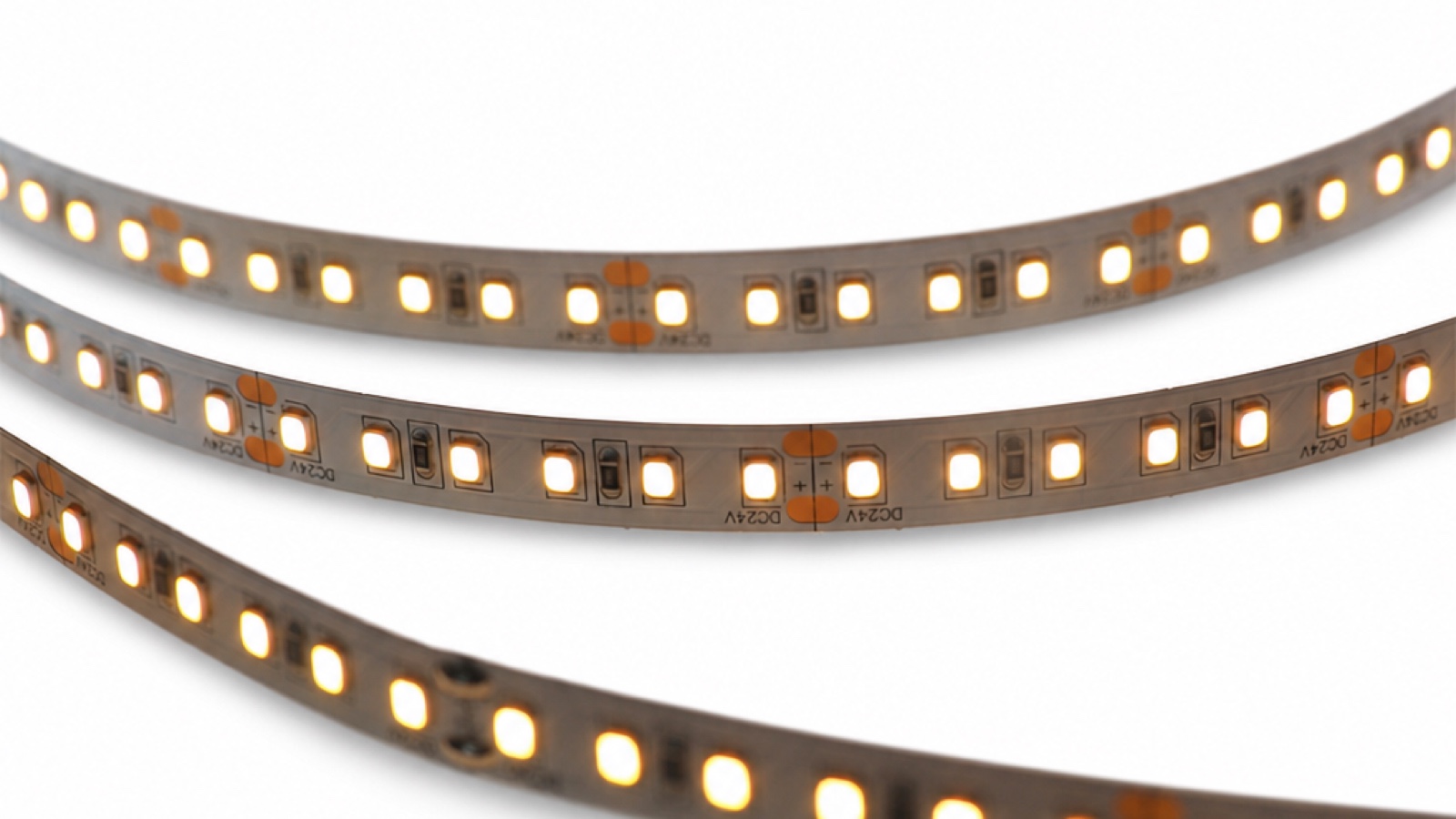
For retail chains, museum contractors, display manufacturers, lighting brands and distributors, a high CRI LED strip should be specified as part of a complete visual and electrical system. The purchasing decision is not finished when a quotation says “CRI 90,” “CRI 95” or “full spectrum.” Buyers still need to confirm the exact color data, CCT, batch tolerance, light output, profile, diffuser, driver, dimming behavior and sample scene.
This guide explains how to compare high CRI LED strip lights for retail shelves, museum cases and display lighting without relying on one headline number. It is written to help B2B buyers prepare a technically useful sample request, specification and RFQ.
Quick answer for high-CRI strip buyers
| Purchasing question | Recommended action |
|---|---|
| Is CRI or Ra enough? | No. Use it as a first screen, then request R9 where relevant and TM-30 data or a spectral report for color-critical projects. |
| Does “full spectrum” prove suitability? | No. Treat it as a product-positioning term until the exact CCT/model report and real-object mock-up are reviewed. |
| Which CCT is best? | There is no universal best CCT. Compare the actual merchandise, artwork or display materials under the project environment. |
| Should the buyer choose SMD or COB? | Choose by color data, source appearance, profile depth, output, thermal conditions, cut interval, controls and cost. High CRI does not determine the package type. |
| What should approve the order? | A documented model-level report plus a representative mock-up using the intended objects, profile, diffuser, driver and controls. |
When high CRI is a real purchasing requirement
High color-rendering performance is worth specifying when the appearance of the illuminated object affects sales, interpretation or formal project approval. It should not be added as an automatic premium label when uniformity, output, protection, run length or cost is the primary requirement.
| Application | Why the color specification matters |
|---|---|
| Fashion and luxury retail | Fabric, leather, wood, metal and skin-related colors must remain credible across shelves and stores. |
| Cosmetics and beauty displays | Reds, pinks, browns and skin tones need more than a high average Ra value. |
| Jewelry and watch cases | Metal tone, stones, packaging and reflections must be assessed together with glare and aiming. |
| Museum and gallery displays | Color appearance must support curatorial intent while the conservation plan controls illuminance, spectrum and exposure. |
| Franchise display systems | Initial samples and repeat orders need defined color tolerance and batch documentation. |
Do not approve a strip by CRI or Ra alone
CRI Ra is an average fidelity metric based on a limited set of test colors. It remains a familiar procurement screen, but it cannot describe every hue or predict visual preference. Two products with the same Ra may render reds, saturated colors and specific materials differently.
| Data to request | How to use it |
|---|---|
| CRI / Ra | Use the exact model and CCT value as an initial fidelity screen, not a complete approval. |
| R9 | Review the supplemental red-rendering value when reds, skin tones, cosmetics, food or warm materials are important. R9 is still not a complete color evaluation. |
| TM-30 | Use fidelity index Rf, gamut index Rg and hue-specific information together. Rf and Rg alone can still hide different hue shifts. |
| Spectral power distribution | Compare the exact CCT/model spectrum where the specifier or conservator needs source-level evidence. |
| Color consistency | Specify the required tolerance, measurement basis and batch/reorder control rather than accepting “same color” as a verbal promise. |
For an RFQ, request the report for the exact production model and CCT being sampled. A report from another density, power level or CCT should not be treated as automatic evidence for the offered item.
How to evaluate TM-30 without turning it into another single score
TM-30 provides a broader method for describing color rendition. Rf summarizes average color fidelity, Rg summarizes average gamut area, and the color vector graphic and hue-bin data show where saturation or hue shifts occur. A higher Rf does not automatically mean the source is the best commercial choice, and an Rg near 100 does not prove that every hue is unchanged.
Retail projects may prioritize a natural or slightly vivid appearance for specific merchandise. Museum projects may prioritize fidelity, curatorial intent and conservation constraints. Ask the lighting designer or project specifier which TM-30 measures and tolerances apply, then compare the actual objects under the candidate sources.
Treat “full spectrum” as a claim that needs evidence
“Full spectrum” is widely used in lighting marketing, but it is not a universal pass/fail specification for LED strip procurement. Buyers should ask what the supplier means by the term and request the corresponding spectral, CRI and TM-30 data for the exact model.
- Confirm the exact CCT represented by the report.
- Check whether the tested sample matches the offered LED package, density and power.
- Review the report together with the real merchandise or collection object.
- Do not infer conservation suitability, visual preference or batch consistency from the phrase alone.
Choose CCT with the real object and project environment
CCT changes the visual relationship between the object, background, finishes and surrounding light. A warm source may support timber, leather or hospitality finishes, while a neutral or cooler source may support a different display concept. These are design directions, not universal rules for retail categories or museums.
Compare two or more candidate CCTs when the project has not locked the target. Use the final cabinet materials, wall color, glass, diffuser and ambient lighting. Check the result from normal customer or visitor positions rather than evaluating a bare strip on a workbench.
High CRI SMD or COB: decide by the whole system
| Buying factor | What to compare |
|---|---|
| Color performance | Exact CRI/R9/TM-30 or spectral data for the offered model and CCT. |
| Source appearance | LED-point visibility through the actual profile and diffuser at normal viewing angles. |
| Output and efficiency | Measured lumens per meter, watts per meter and maintained performance in the intended assembly. |
| Mechanical fit | PCB width, cut interval, profile depth, connector space and service access. |
| Electrical plan | Voltage, feed length, conductor size, driver/controller compatibility and dimming behavior. |
| Commercial fit | MOQ, batch control, repeat-order documentation, sample lead time, packaging and warranty basis. |
SMD is a practical route for retail shelves, cases and repeatable project supply. COB can be useful where short mixing distance makes source smoothness critical. Neither package type guarantees the required color quality, thermal performance or visual result without model-level evidence and a mock-up.
Retail lighting: approve color and repeatability together
A successful first sample is not enough for a multi-store rollout. Retail buyers should define the target CCT and color data, acceptable batch tolerance, reorder process and visual approval objects. The sample set should include real fabrics, packaging, skin-related colors, metals or food products relevant to the store.
- Record the exact strip model, CCT, production bin or tolerance and driver used in the approved mock-up.
- Use the intended profile, diffuser, shelf finish and aiming position.
- Check glare and reflections on glass, polished packaging and metal surfaces.
- Test the specified dimming range for flicker, noise and stable visual appearance.
- Agree how repeat orders will be checked against the approved reference.
Museum and gallery projects need a conservation plan, not only high CRI
High CRI does not make a light source automatically safe for collections. Museum suitability depends on the sensitivity of the object, illuminance at the object, cumulative exposure, spectral distribution, distance, thermal conditions, operating schedule, controls and the institution's conservation policy.
The LED strip should be reviewed as part of the complete display assembly, including profile, diffuser, ventilation, driver, dimmer, mounting position and maintenance access. Curators, conservators and lighting designers should approve the final condition. A supplier sample can support that decision but cannot replace project-specific conservation authority.
Display cabinets: control dots, glare, heat and driver layout
Color data can pass while the installed cabinet still fails visually. Shallow profiles may reveal points, glass may reflect the source, and poor driver placement may create heat or service problems. Long shelves may also show brightness differences if the feed and conductor layout is not designed for the selected strip.
- Inspect source visibility and reflections from normal viewing positions.
- Verify the profile and diffuser can manage the selected power and LED spacing.
- Measure or compare the beginning and end of the longest representative run.
- Locate drivers and connections where they can be cooled, serviced and safely installed.
- Confirm that dimming does not introduce visible flicker, unstable low-end operation or unacceptable color changes.
Build a representative high-CRI sample
| Sample element | Approval check |
|---|---|
| Real objects | Use the actual merchandise, artwork, materials or approved color references. |
| Mechanical assembly | Install the real profile, diffuser, glass and mounting position. |
| Electrical system | Use the intended voltage, driver, controller, cable route and representative feed length. |
| Viewing conditions | Assess from normal positions and at the project's operating light levels. |
| Color documentation | Match the sample label to the exact model, CCT and report. |
| Thermal and dimming behavior | Operate under representative ambient and mounting conditions, then check against model and driver limits. |
| Repeat-order control | Record the approved reference and the supplier's batch-matching process. |
RFQ checklist for retail, museum and display lighting
| RFQ input | Information to send |
|---|---|
| Application | Retail shelf, cosmetics counter, jewelry case, museum case, gallery niche, cabinet or distributor program. |
| Color target | CCT, CRI/Ra, required R9, TM-30 or spectral data and color-consistency requirement. |
| Visual target | Required source smoothness, profile/diffuser, viewing distance and reflective materials. |
| Electrical data | Voltage, power/output target, run lengths, total quantity, feeds, driver location and control system. |
| Mechanical data | PCB/profile width, cut interval, shelf/case drawing, cable exit and service access. |
| Environment | Dry indoor, dust, cleaning exposure, humidity or protected-structure requirement. |
| Commercial data | Sample quantity, delivery market, compliance files, labeling, packaging, MOQ and repeat-order plan. |
Review Wismart high-CRI product options
Wismart's High CRI / Full Spectrum SMD route currently lists 24V, CRI 98, 2835 packages and 120, 180 and 240 LEDs/m model options, with model rows covering different power and PCB-width combinations. These values identify a starting family; the exact CCT, output, color report, cut interval, thermal conditions and production specification still need confirmation for the selected row.
Compare the broader SMD Strip Lights range when the project needs other white-light, control or protected options. Review COB Strip Lights separately when source smoothness in a shallow profile is a primary requirement.
Download the Wismart SMD Strip Light Catalog, then send the display drawing, actual application, CCT, color-data requirement, profile, driver/control plan, run lengths and quantity through the high-CRI sample and quotation form.
Frequently asked questions
Is CRI 98 automatically better than CRI 95?
Not automatically for every project. Confirm that the values come from the exact offered model and CCT, then review R9, TM-30 or spectral data and the real-object mock-up. Output, consistency, dimming, thermal performance and commercial repeatability also affect the final decision.
Does a high R9 value replace TM-30?
No. R9 adds information about a saturated red test color, but it does not describe the full range of hues. TM-30 provides broader fidelity, gamut and hue-specific information. Use the metrics that match the project's specification and visual task.
Is LED automatically safe for museum objects?
No. Collection risk depends on object sensitivity, illuminance, spectrum, cumulative exposure, distance, thermal conditions and controls. The museum's conservator and project team should approve the complete display condition.
What should be included in a high-CRI sample request?
Request the exact model/CCT report, enough strip to reproduce the critical display detail, the intended profile or diffuser where available, and a compatible driver/control plan. Evaluate it with the real objects and document the approved reference for production and repeat orders.
Conclusion
A reliable high CRI LED strip for retail display lighting, museum cases or display cabinets is selected through model-level color data and a representative mock-up. Use CRI as one screen, add R9 and TM-30 or spectral evidence where the project needs it, and approve the complete profile, diffuser, driver, dimming, thermal and batch-control system.
Review the High CRI / Full Spectrum SMD series, download the SMD catalog and specification route, and request a matched datasheet, sample and quotation using the real display requirements.